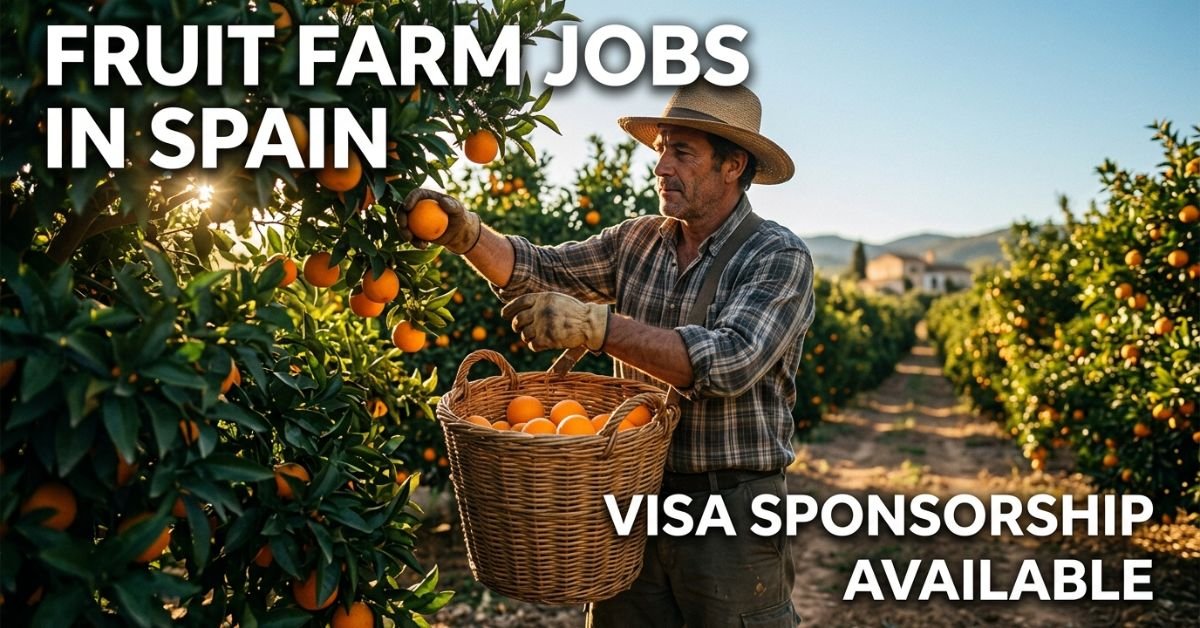
Fruit farm worker jobs in Spain can be an option for people looking for entry-level agricultural work without advanced qualifications. Seasonal farm jobs may include fruit picking, harvesting, sorting, packing, planting, cleaning, and basic field work.
For workers from outside the European Union, legal employment normally requires the correct residence and work authorization.
Also Read



Spain has a formal system for seasonal employment from abroad. One important route is the seasonal work and circular migration system known as GECCO. Under this system, employers can recruit eligible foreign workers for seasonal positions when the legal requirements are met.
The Spanish government states that seasonal authorization can allow employment for a maximum of nine months in a calendar year and can be linked to a single employer.
What Fruit Farm Workers Do
Fruit farm work is generally practical and physically active. Specific duties depend on the farm, crop, location, and employment contract.
Common duties can include:
- Picking ripe fruit by hand.
- Carrying harvested fruit or farm containers.
- Sorting fruit according to quality.
- Packing fruit for transport.
- Removing damaged or unsuitable produce.
- Cleaning work areas and basic farm equipment.
- Helping with planting or other seasonal field activities.
- Following instructions from supervisors and farm managers.
Many of these jobs are suitable for workers with limited formal education because the work is mainly based on practical tasks. However, employers can set their own requirements, so applicants should always read the individual job offer carefully.
Visa Sponsorship for Non-EU Workers
For a person outside the European Union, a job offer alone does not automatically provide permission to work in Spain. The employer and worker must follow the applicable immigration procedure.
Spain’s seasonal employment rules provide for temporary residence and work authorization. The official immigration guidance states that seasonal workers can be authorized to work for periods of up to nine months in a calendar year. The authorization can have a four-year duration, subject to the conditions of the authorization.
Under the collective recruitment system, workers generally must:
- Be outside Spain when applying through the relevant recruitment route.
- Not be citizens of the EU, European Economic Area, or Switzerland under the applicable rules.
- Meet criminal-record requirements.
- Meet health and public-order requirements.
- Have a valid passport or recognized travel document.
- Agree to return to their country of origin after the employment period.
- Meet any requirements connected with the specific job.
The official rules also require the employer to meet conditions for hiring foreign workers and to provide a written employment contract containing important information about the job.
Basic Job Information
| Job area | Typical entry-level work |
|---|---|
| Fruit picking | Picking and collecting ripe produce |
| Harvesting | Helping with seasonal crop collection |
| Sorting | Checking and separating fruit |
| Packing | Preparing produce for shipment |
| Farm maintenance | Basic cleaning and field support |
| Seasonal agricultural work | Practical tasks assigned by the farm |
The exact duties, working hours, contract period, accommodation arrangements, and pay must come from the employer’s job offer and employment contract.
Salary and Employment Conditions
Spain’s national minimum wage applies to agricultural work as well as other covered employment. The official 2026 minimum wage is €40.70 per day or €1,221 per month, depending on how the salary is structured. For qualifying fixed-term contracts of up to 120 days with the same employer, the applicable minimum is also governed by the national minimum wage rules.
Actual agricultural wages can differ where a collective agreement or employment contract provides applicable conditions above the statutory minimum. Workers should check whether the advertised amount is gross or net and whether deductions are made for any services provided by the employer.
Do not rely on social media posts that promise a specific salary without showing a genuine employer, contract, and legal work arrangement.
How the Seasonal Work Process Works
For eligible overseas workers, the process involves more than simply applying for a visa at a consulate.
A typical legal process involves:
- Finding an eligible employer or recruitment opportunity. The position must be one that can legally be filled through the applicable foreign-worker procedure.
- Receiving a formal employment contract. The contract should identify essential employment information.
- Employer-side authorization. The employer handles the relevant application for authorization under the applicable procedure.
- Visa application. Where required, the worker applies for the seasonal residence and work visa after the authorization is granted.
- Travel to Spain. The worker enters Spain using the required documentation.
- Social Security registration. Official guidance states that the worker must be registered in the relevant Social Security system after entering Spain.
- Foreign identity card where required. Workers covered by the applicable seasonal authorization must follow the identity-card procedure.
Applicants should use the instructions of the relevant Spanish consulate and immigration authorities because documentation can vary according to the procedure and the applicant’s circumstances.
Documents Applicants May Need
The exact document list depends on the application route, but official Spanish immigration guidance identifies documents such as:
- Valid passport or travel document.
- Employment contract.
- Approved residence and work authorization.
- Criminal-record documentation where required.
- Medical certificate where required.
- Visa application documents.
- Evidence of applicable fee payments.
Documents issued outside Spain may need the required legalization or authentication and an official translation, depending on the document and procedure.
Where to Find Legitimate Farm Jobs
Applicants should focus on genuine employers, recognized recruitment channels, and official employment or immigration information.
Useful search terms include:
- Fruit picker jobs in Spain.
- Seasonal agricultural worker Spain.
- Farm worker Spain with work permit.
- Fruit harvesting jobs Spain.
- Seasonal farm jobs for foreign workers.
- Agricultural jobs with employer sponsorship.
Be careful with recruiters who demand large payments before providing a verifiable job offer. A legitimate vacancy should provide clear information about the employer, position, contract, location, and legal recruitment process.
Important Points for Applicants
Fruit farm jobs can be physically demanding and seasonal. Before accepting an offer, check the contract carefully and confirm:
- Employer’s legal name and contact details.
- Job location.
- Start and end dates.
- Working hours.
- Salary and payment method.
- Accommodation terms, if offered.
- Transport arrangements, if stated.
- Work authorization and visa responsibilities.
- Any deductions from wages.
Most importantly, do not travel to Spain for agricultural employment without the work authorization required for your situation. Legal seasonal employment provides a clearer and safer route than working without permission.
Final Guidance
Fruit farm worker jobs in Spain can provide an entry-level route into legal seasonal agricultural employment for eligible foreign workers. Fruit picking, harvesting, sorting, packing, and general farm duties do not necessarily require advanced education, but applicants must meet the immigration and employment conditions that apply to the position.
Spain’s official seasonal work framework allows qualifying foreign workers to receive temporary residence and work authorization for seasonal employment, with specific rules concerning employers, contracts, visas, Social Security registration, and return to the country of origin.
For the most reliable information, applicants should verify every vacancy and check the current requirements with Spanish immigration authorities, the relevant Spanish consulate, and the employer before paying money or making travel arrangements.