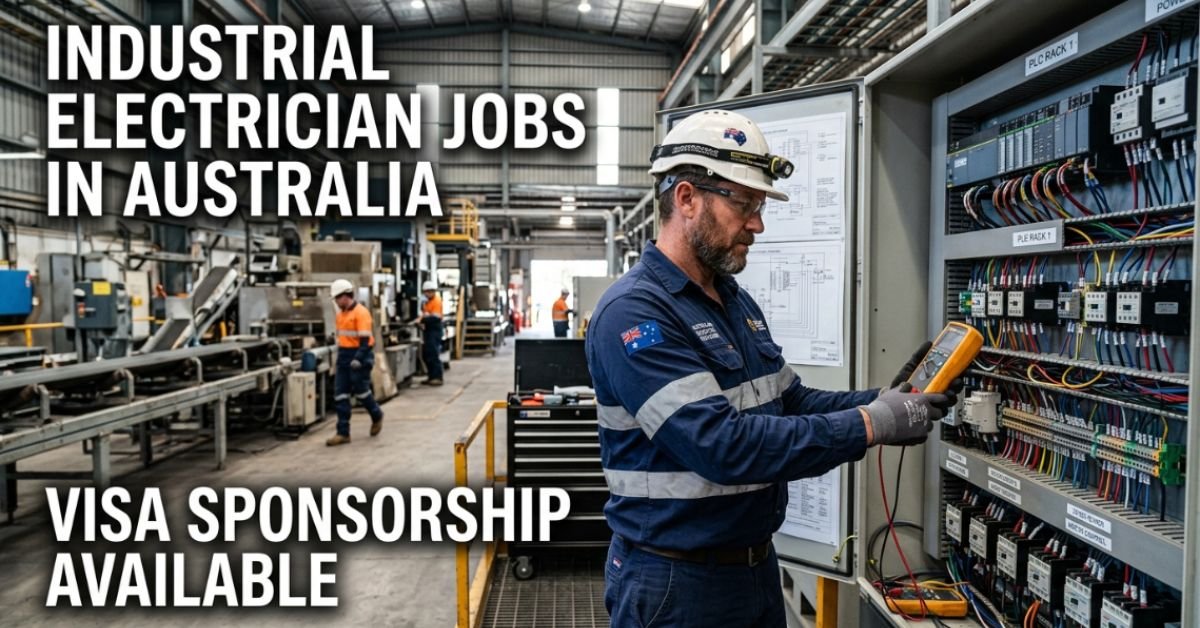
Industrial electrician jobs in Australia can provide opportunities for qualified overseas workers who have electrical skills and want to work for an Australian employer. These jobs are found in areas such as construction, manufacturing and mining. Electricians may install, test, maintain and repair electrical equipment, wiring, switchboards and control systems.
For people with limited education or no professional trade background, it is important to understand one point clearly: an industrial electrician is not an unskilled job. Electrical work is a licensed trade in Australia. However, people with practical electrical training, an overseas trade qualification or relevant work experience may have pathways to have their skills assessed.
Also Read



What Does an Industrial Electrician Do?
An industrial electrician works with electrical systems used in factories, plants, workshops, construction sites and other industrial workplaces.
Common duties can include:
- Installing electrical wiring and equipment
- Connecting electrical systems to a power supply
- Installing and maintaining switchboards
- Testing electrical circuits
- Finding electrical faults
- Repairing faulty wiring and electrical components
- Reading wiring diagrams and technical specifications
- Testing electrical equipment and control systems
- Maintaining electrical installations
The exact duties depend on the employer and the position. Jobs and Skills Australia lists Electricians (General) under ANZSCO 341111 and describes work involving installation, testing, connection, commissioning, maintenance and modification of electrical equipment, wiring and control systems.
Can Overseas Electricians Get Employer Sponsorship?
Yes, employer-sponsored skilled visa pathways are available for eligible workers. One important option is the Skills in Demand visa, subclass 482. Home Affairs states that applicants for this visa must have the skills needed to perform the nominated occupation and generally need at least 12 months of work experience in the occupation or a related field.
Other employer-sponsored pathways include:
| Visa pathway | Main feature |
|---|---|
| Skills in Demand, subclass 482 | Temporary employer-sponsored work |
| Employer Nomination Scheme, subclass 186 | Permanent employer-sponsored pathway |
| Skilled Employer Sponsored Regional, subclass 494 | Employer-sponsored work in a designated regional area |
The requirements differ between visa subclasses. Licensing, skills assessment, work experience, English and other requirements may apply depending on the visa and the applicant’s circumstances.
A job advertisement saying “visa sponsorship available” does not mean every applicant will qualify for a visa. The employer and worker must meet the requirements of the relevant visa program.
Skills and Qualifications You May Need
A person applying for an electrician position should have genuine electrical training and practical experience. An overseas qualification or apprenticeship may be relevant to the skills assessment process.
Trades Recognition Australia, or TRA, assesses skills for certain electrical occupations. Electrician (General) and Electrician (Special Class) are licensed occupations covered by specific TRA assessment pathways.
Applicants should keep documents that can prove their background, such as:
- Trade certificates or qualifications
- Apprenticeship records
- Employment references
- Evidence of paid work experience
- Identity documents
- Other documents requested by the assessment authority
Do not claim electrical experience that you do not have. Electrical work involves serious safety risks, and Australian employers and authorities require evidence of the worker’s skills.
Electrical Licensing in Australia
Having an overseas electrical qualification does not automatically give a person an unrestricted Australian electrical licence.
TRA explains that successful applicants in the relevant electrician pathways may receive an Offshore Technical Skills Record, known as an OTSR. This can be used to apply to the relevant state or territory licensing authority for a provisional licence, registration or certificate. Licensing requirements vary between Australian states and territories.
Further Australian context training and supervised employment may be required before obtaining the relevant Australian qualification or licence. This training covers Australian-specific requirements, including workplace health and safety rules, codes of practice and standards.
This means overseas electricians should check the licensing rules for the state or territory where they want to work.
Skills Assessment for Overseas Electricians
For eligible overseas applicants, a skills assessment can be an important part of the process. TRA states that technical assessments can involve a technical interview and evidence from employers or referees. For Electrician (General) and Electrician (Special Class), a practical demonstration of skills is compulsory under the applicable pathway.
The assessment is designed to determine whether the applicant has the skills expected of a tradesperson in Australia.
Applicants should therefore prepare carefully and make sure their documents and employment history are accurate.
How to Find Sponsored Electrician Jobs
People looking for sponsorship should search directly for genuine vacancies rather than paying someone for a guaranteed job.
Useful job search terms include:
- Industrial electrician
- Electrician
- Maintenance electrician
- Electrical tradesperson
- Electrical technician
- Mining electrician
- Manufacturing electrician
- Electrician visa sponsorship
- Electrician employer sponsorship
When reading a vacancy, check whether the employer specifically states that sponsorship is available. Also check the required licence, qualifications, experience, location and job duties.
Important Advice for Less Skilled Applicants
If you have little or no electrical experience, applying directly for a sponsored electrician position is unlikely to be suitable because electrician work requires specific trade skills and licensing.
A better approach is to first build legitimate electrical skills through recognised training and practical experience. Do not use a false certificate, fake employment reference or another person’s work history.
For someone who already has some electrical experience but limited formal education, the key issue is not simply having a university degree. Relevant trade qualifications, practical skills and verifiable employment can be important for electrical assessment and employment.
Where to Check Official Requirements
Visa rules and occupation requirements can change, so applicants should check official Australian sources before paying application or recruitment fees.
The Department of Home Affairs provides the current skilled occupation information and visa requirements. TRA provides information about skills assessments and licensing pathways for overseas electricians.
Before applying, check:
- Whether your occupation is eligible for the visa pathway.
- Whether you need a skills assessment.
- Whether you need an Australian electrical licence or provisional licence.
- Whether you meet the required work experience.
- Whether the employer is offering genuine sponsorship.
- Whether the job duties match your actual skills and experience.
Industrial electrician jobs can be a genuine employment pathway for suitably qualified overseas workers. The most important step is to match your real electrical skills and experience with the correct Australian occupation, licensing process and visa pathway. Checking official requirements before applying can help avoid unsuitable jobs, unnecessary costs and false sponsorship offers.