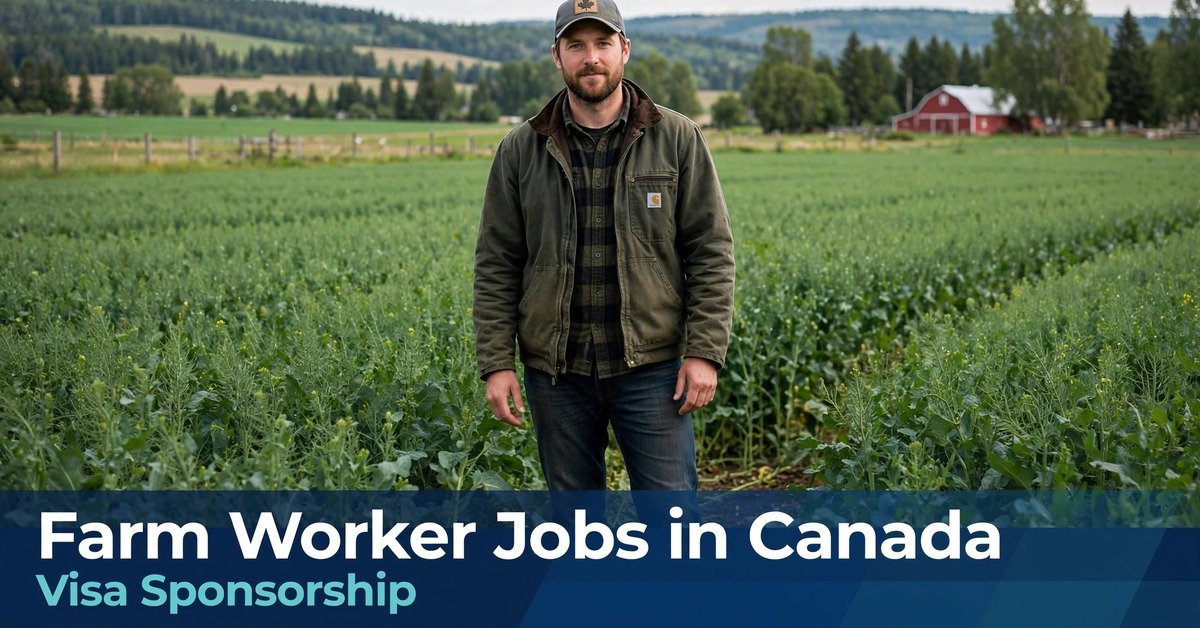
Canada grows a large share of its food on farms across Ontario, British Columbia, Alberta, Quebec, Manitoba, Saskatchewan, and the Atlantic provinces. Because the work is seasonal in many regions, employers often hire large teams for planting, growing, harvesting, packing, and transport, and they may also offer housing, transport, and meals as part of the job package.
What Farm Workers Do in Canada
Farm work changes with the season and the type of farm. On crop farms, workers plant seeds, water plants, weed fields, and pick fruit and vegetables when they ripen. In greenhouses, workers tend indoor crops, prune plants, and pack produce in controlled conditions. On livestock farms, workers feed animals, clean barns, and monitor animal health. In all settings, the work is physical, the days can be long, and safety rules for machinery, chemicals, and heat must be followed closely.
Also Read



How Visa Sponsorship Works for Farm Workers
In Canada, the phrase visa sponsorship usually means an employer supports a foreign worker through the Temporary Foreign Worker Program. The employer must first show that local workers were not available for the job, and this step is called a Labour Market Impact Assessment, often shortened to LMIA. When the assessment is positive, the worker can apply to Immigration, Refugees and Citizenship Canada for an employer-specific work permit, which allows work for that employer in that job. No employer can simply promise a visa on its own, because the work permit decision always rests with the government after the employer documents and the worker application are checked.
Common Farm Worker Jobs and Where They Are Found
Different regions specialize in different kinds of farm work, and this shapes the jobs that appear most often. Ontario is well known for greenhouse vegetables, fruit orchards, and mushroom farms, especially around Leamington and Kingsville, while British Columbia offers berry, vegetable, vineyard, and orchard work in the Fraser Valley and the Okanagan. Alberta and Saskatchewan have large grain, cattle, and mixed farms where general farm workers help with livestock care, machinery support, and field work, and Quebec and Manitoba also hire workers for vegetable, dairy, and mixed farming. Job titles vary from farm to farm, but the core duties stay similar, and many employers value reliability, stamina, and a willingness to work early mornings, weekends, and longer days during harvest.
| Job Title | Main Tasks | Where This Work Is Common |
|---|---|---|
| General Farm Worker | Planting, harvesting, sorting, packing, and general farm duties | Crop and mixed farms across Canada |
| Greenhouse Labourer | Tending indoor crops, pruning, harvesting, and packing produce | Ontario, British Columbia, and Alberta |
| Harvesting Labourer | Picking fruit and vegetables by hand and packing them for transport | British Columbia, Ontario, and Quebec |
| Livestock Farm Worker | Feeding animals, cleaning barns, and checking animal health | Alberta, Saskatchewan, Manitoba, and Ontario |
| Farm Equipment Helper | Assisting with machinery, loading, yard work, and basic maintenance | Grain and mixed farms on the Prairies |
What Employers Usually Expect
Most farm employers do not ask for a degree, and many do not require formal qualifications at all, because the work is learned through training and practice on the farm. Employers do look for people who are physically fit, able to work outdoors in changing weather, comfortable with early starts and shift work, and able to follow safety instructions in English or French, depending on the province. Basic English is usually enough for general farm work, though stronger language skills help a worker understand safety briefings and ask questions. Previous farm, gardening, construction, or other outdoor physical work is a clear advantage, and a clean record and a valid passport are standard requirements for any work permit application.
Pay, Hours, and Living Conditions
Farm worker pay in Canada is usually paid by the hour, and the rate must meet at least the provincial minimum wage and the wage set out in the job offer and LMIA. Rates vary by province, farm type, and experience, and many listings for general farm and greenhouse work fall in a broad range around the local minimum wage and above it, with overtime rules set by provincial employment standards. Some farms also offer piece-rate pay for harvesting, where earnings depend on the amount picked, but the total must still respect the applicable employment standards for the province. Workers should read the offer carefully, confirm how overtime and weekend work are paid, and keep a copy of every pay slip and contract.
How to Apply Step by Step
The safest way to apply starts with trusted job sources rather than random messages from strangers. Job Bank Canada, the official government job site, allows applicants to search for farm worker roles and filter for employers that have requested an LMIA, and Indeed Canada also lists many farm, greenhouse, and harvesting roles from real employers across the country. Applicants should read each listing in full, check whether it mentions LMIA support or openness to foreign workers, and apply only to employers whose location, wage, hours, and contact information look genuine and verifiable. Applying to several suitable farms increases the chance of a reply, because farm hiring is seasonal and employers often fill roles quickly once the season approaches.
- Search Job Bank Canada and Indeed Canada for farm worker, greenhouse labourer, and harvesting labourer roles.
- Read the full listing and confirm the location, wage, hours, and any mention of LMIA support.
- Send a short, honest resume that highlights outdoor work, physical stamina, and reliability.
- Ask the employer, in writing, about the LMIA, housing, transport, and total deductions.
- Wait for a written job offer and a positive LMIA before starting any work permit step.
- Apply for the work permit through the official immigration system with the employer’s documents.
- Never pay for an LMIA, and never start work before the work permit is approved.
Mistakes to Avoid and Final Advice
The most costly mistake is trusting a promise that sounds too easy, such as a guaranteed visa, a very high salary for simple work, or a job that requires a large payment before any documents are shown. Real farm hiring takes time, because the employer must complete recruitment and LMIA steps before the worker can apply for a permit, and no genuine employer can bypass the government decision. Applicants should also avoid working on a visitor visa, because visitor status does not allow farm work, and working without authorization can lead to removal and future refusals. A second common mistake is applying only to one farm and then waiting without a backup plan, when a wider search across provinces and farm types gives a much better chance of success.