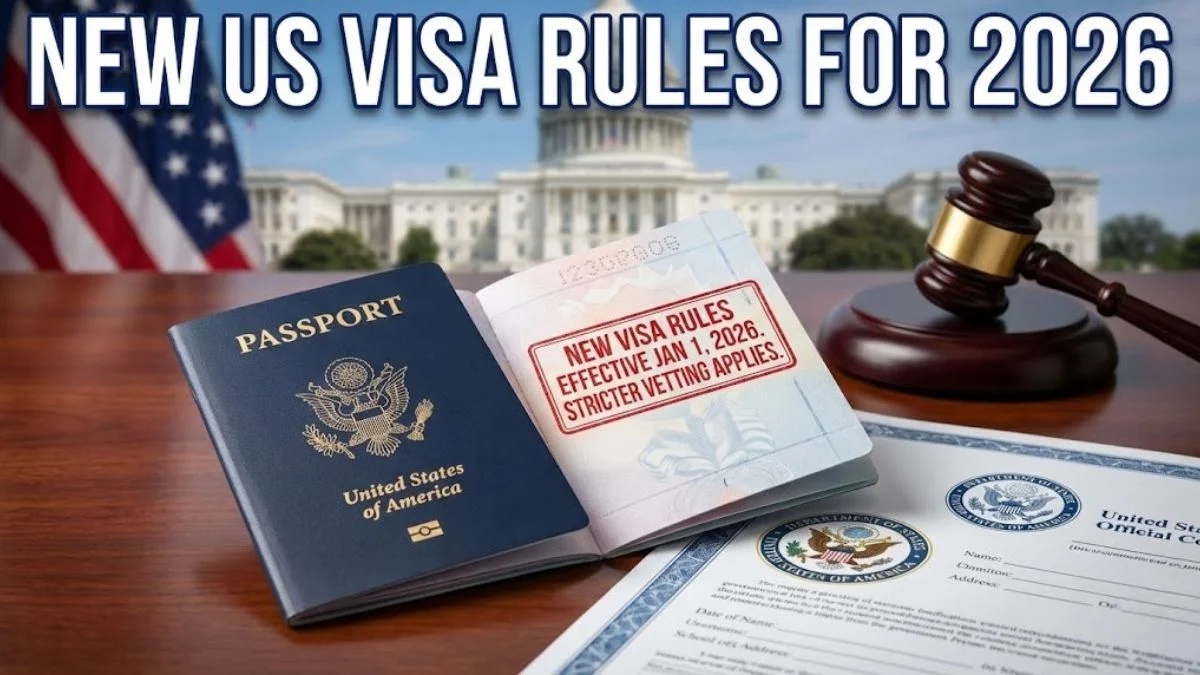
As we step into January 2026, the landscape of American immigration has shifted dramatically. New rules signed by President Trump are now in full effect, bringing major changes to how people enter the country and how the highly sought-after H-1B work visas are handed out.
If you are planning to travel, study, or work in the U.S., these updates are not just “paperwork”—they represent a fundamental change in American policy.
Also Read
1. The Growing Travel Ban: 39 Countries Now Affected
The most immediate change is the expansion of the travel ban. What started as a focused list has now grown to include 39 countries. The administration states these measures are essential for “national security,” citing poor data sharing and security risks in these nations.
- Total Ban: Individuals from countries like Syria, Mali, Niger, and South Sudan are now largely barred from entry. They join a list that already included Afghanistan, Myanmar, and Somalia.
- Partial Restrictions: Countries like Nigeria, Venezuela, and Cuba face specific limits, often affecting tourist and student visas while keeping some employment channels open under heavy scrutiny.
The Reality: While the government calls this a safety measure, critics and immigrant advocates argue it unfairly targets specific regions—particularly in Africa and the Middle East—creating a “digital wall” that separates families and blocks talent.
Also Check: Why African Nations are Banning US Citizens in 2026?
2. The H-1B Shake-up: Money Matters More Than Luck
For years, the H-1B visa (used by tech giants and startups to hire skilled foreign workers) was a game of luck—a random lottery. That is over. Starting now, the system uses a “Weighted Selection.”
Instead of everyone having an equal chance, the system now prioritizes high earners.
| Wage Level | Meaning | Lottery Entries |
| Level IV | Highest expertise/senior roles | 4 entries (Best chance) |
| Level III | Experienced professionals | 3 entries |
| Level II | Qualified/Mid-level | 2 entries |
| Level I | Entry-level/Junior | 1 entry (Lowest chance) |
The Impact: This change is designed to stop “cheap labor” outsourcing. However, it creates a massive hurdle for international students. A fresh graduate from a U.S. university rarely earns a “Level IV” salary, meaning the path from graduation to a stable job just got much steeper.
3. Why This Matters: The “Brain Drain” and Global Pushback
This isn’t just about visas; it’s about a global competition for talent. Experts warn that if the U.S. becomes too difficult to enter, the world’s brightest minds will simply go elsewhere—to Canada, the UK, or Germany. This is known as the “Brain Drain.”
Furthermore, we are seeing international retaliation. Several African nations have already announced their own travel bans on U.S. citizens in response. Travel is no longer just a personal choice; it has become a tool of high-stakes diplomacy.
Expert Insight: “By prioritizing only the highest salaries, the U.S. risks losing the next generation of innovators who are currently at the start of their careers. We are trading long-term innovation for short-term wage protection.”
Looking Ahead
The coming months will likely see these rules challenged in court. For now, businesses must rethink their hiring strategies, and travelers from the affected 39 countries must navigate a much more complex and expensive system.
For more details on the specific legal language, you can view the official Presidential Proclamation here.
Marc Sterling is a knowledgeable writer focused on immigration, citizenship, and visa processes, helping readers navigate complex legal landscapes.