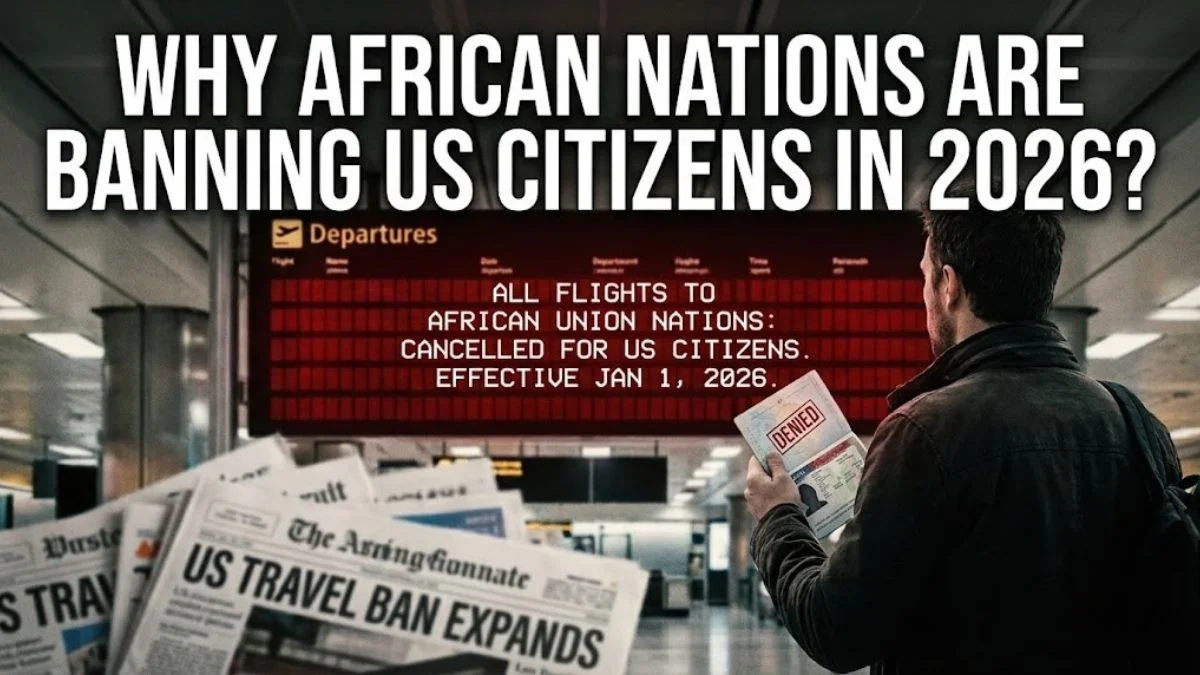
For decades, a U.S. passport was considered a “golden ticket”—an almost universal pass to any corner of the globe. That reality shifted overnight this week. Mali and Burkina Faso have joined Niger and Chad in imposing a complete ban on American citizens.1
This isn’t a random act of hostility. It is a direct “tit-for-tat” response to the Trump administration’s decision to expand its travel restrictions to 39 countries—26 of which are in Africa. By invoking the “Principle of Reciprocity,” these West African nations are sending a clear message: if our citizens aren’t welcome in your cities, your citizens aren’t welcome in our deserts.
Also Read


The Numbers Behind the Ban
To understand the scale of this diplomatic freeze, we have to look at the list. The U.S. “Full Ban” list (no entry for immigrants or visitors) now includes:
| Full Ban Countries (Select) | Partial Ban (Restricted Visas) |
| Afghanistan, Mali, Burkina Faso | Nigeria, Senegal, Tanzania |
| Niger, Syria, Somalia, Haiti | Angola, Zimbabwe, Zambia |
| North Korea, Yemen, Libya | Cuba, Venezuela, Malawi |
The U.S. government cites “national security” and poor “vetting capabilities” as the reason.2 However, for the leaders of the Alliance of Sahel States (Mali, Niger, and Burkina Faso), this is viewed as an attack on their sovereignty during a time when they are already fighting intense internal insurgencies.
Expert Insight: More Than Just Travel
From a subject matter perspective, this isn’t just about tourism. It represents a total collapse of the “soft power” the U.S. spent 20 years building in Africa.
- The Death of AGOA: The African Growth and Opportunity Act (AGOA), which allowed African goods into the U.S. tax-free, has essentially expired. In its place, the Trump administration has introduced a tariff-based regime.
- Trade vs. Aid: The U.S. has moved away from humanitarian aid—shutting down major USAID programs—and shifted toward “transactional diplomacy.” For example, the U.S. recently secured mineral rights in the Democratic Republic of Congo (DRC) in exchange for mediating peace deals, prioritizing cobalt and lithium for American tech over traditional development.
- The “Genocide” Narrative: A major friction point remains South Africa.3 The U.S. has imposed 30% tariffs on South African goods following claims regarding the treatment of the Afrikaner minority.4 This has pushed Africa’s most advanced economy further toward the BRICS bloc and away from Washington.
Future Implications: The 2026 World Cup and Beyond
The timing of these bans couldn’t be worse for global culture. The 2026 FIFA World Cup, hosted primarily in the United States, is just around the corner.5
With nations like Senegal and Ivory Coast now under partial travel bans, thousands of fans—and potentially even support staff—from these football-loving nations may find themselves unable to attend.6 If these visa restrictions remain in place, we are looking at the most politically segregated sporting event in modern history.
What Happens Next?
We are likely to see a “Strategic Pivot.” As the U.S. retreats from its role as a primary aid provider and increases visa hurdles, African nations are looking East.7 China and Russia have already moved to fill the void, offering security partnerships and infrastructure deals that don’t come with the same vetting requirements or “reciprocal” baggage.
For the average American traveler or business person, West Africa just became a “no-go” zone. For the global diplomat, the map has just been redrawn.
Official Resource: For a deep dive into how these shifts are impacting global commerce, read the full analysis from the Center for Strategic and International Studies (CSIS).

Marc Sterling is a knowledgeable writer focused on immigration, citizenship, and visa processes, helping readers navigate complex legal landscapes.