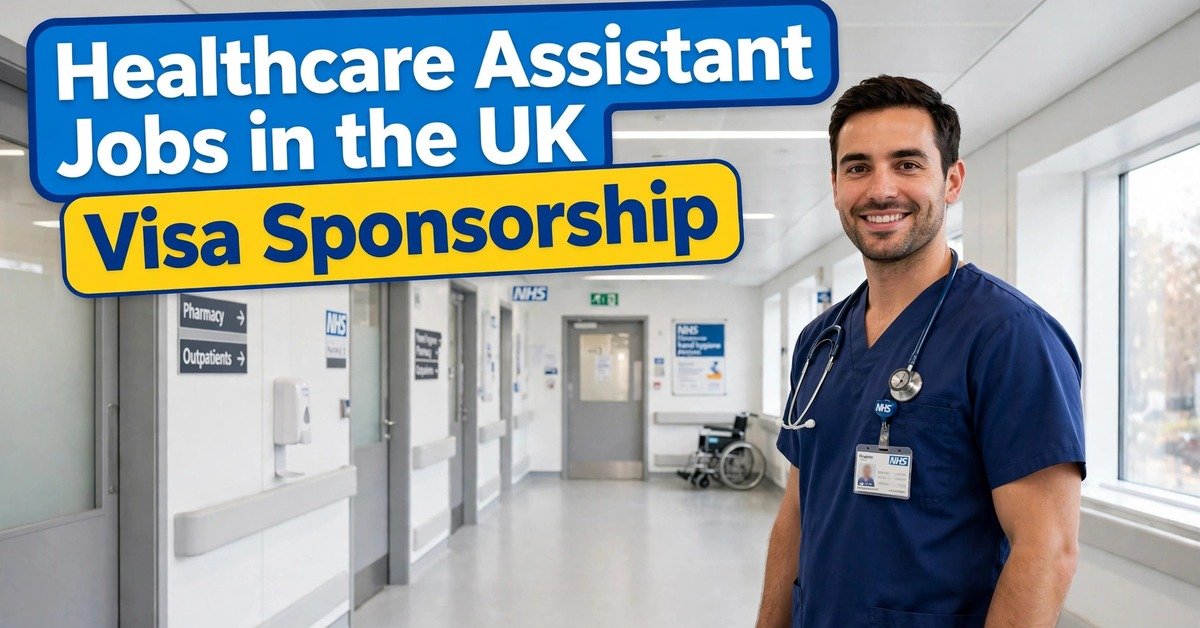
Healthcare assistant jobs in the UK are one of the most practical ways for foreign workers to start a care career abroad. Healthcare assistants, often called HCAs, support nurses and doctors with everyday patient care in NHS hospitals, community clinics, and private care settings. Many NHS trusts hire from overseas, and the Health and Care Worker visa gives sponsored workers a legal route to live and work in the UK.
What a Healthcare Assistant Does in the UK
A healthcare assistant works under the direction of a registered nurse or another registered health professional. HCAs help patients wash, dress, eat, and move around safely. They take basic observations such as temperature, pulse, and blood pressure, and record the results clearly for the nursing team. They also help with feeding, toileting, changing beds, and keeping wards clean and tidy.
Also Read



In community settings, a healthcare assistant may visit patients in their own homes, helping with mobility and checking on recovery after treatment. In hospitals, HCAs work on wards, in outpatient clinics, and in specialist units such as elderly care and rehabilitation.
Why UK Employers Hire Healthcare Assistants from Abroad
The UK health and care system has a large and ongoing shortage of staff, and demand keeps growing as the population ages. Because of this shortage, many NHS trusts and private healthcare employers hold a sponsor licence and recruit healthcare assistants from other countries.
For the worker, the job offers stable employment, a regular salary, and training that can lead to further study. Many healthcare assistants later train as nurses or move into senior support roles.
The Health and Care Worker Visa Route
The Health and Care Worker visa is part of the Skilled Worker route in the UK immigration system. The official guidance from the UK government lists the jobs that qualify, and nursing auxiliaries and assistants, the occupation code for healthcare assistants, are on that list.
To use this route, you need a job offer from an employer that holds a valid sponsor licence from the Home Office. The employer must give you a Certificate of Sponsorship. You cannot apply for this visa without a genuine job offer and a Certificate of Sponsorship from a licensed sponsor.
Workers on this visa pay a lower application fee than workers on the standard Skilled Worker route, and they do not have to pay the Immigration Health Surcharge. The government also aims to process most applications within three weeks after the applicant has given biometric information.
The Honest Truth About Sponsorship for Care Roles
It is important to understand the current rules clearly, because many older guides online still describe the old system. Standard care worker and senior care worker roles are no longer open to new applicants applying from outside the UK.
The route that remains open to overseas applicants is the healthcare assistant role in a hospital or clinical setting, under the occupation code for nursing auxiliaries and assistants. Your best chance is to apply for HCA jobs with NHS trusts, private hospitals, or healthcare providers that work closely with registered nurses. A standard residential care home without registered nurses on staff is unlikely to be able to sponsor a healthcare assistant from abroad.
No employer can promise you a visa, and no agent can guarantee sponsorship. A job offer must be genuine, the salary must meet the minimum for the role, and you must meet the English language requirement. Be careful of anyone who asks you to pay a large fee for a guaranteed job or visa, because genuine NHS and licensed employers do not charge workers for a job offer.
Who Can Apply and What Employers Look For
You do not need a university degree to become a healthcare assistant, which is one of the reasons the role suits many international applicants. Most employers look for a caring attitude, good spoken and written English at the level the visa rules require, and the ability to work shifts, including early mornings, evenings, nights, and weekends. You also need to be physically fit for a job that involves standing, walking, and helping patients move, and you must pass a background check, known in the UK as a DBS check.
Some care experience helps, but it is not always required. Many employers provide training after you start work, including the Care Certificate, which covers the basic skills and knowledge every care worker in England should have.
Employers also want people who communicate clearly, listen well, and stay calm when a patient is upset or confused. Patience matters, because many patients are elderly, unwell, or living with memory problems.
Salary and Working Conditions
Pay depends on the employer, the location, and the level of the role. NHS healthcare assistants are usually paid on the Agenda for Change pay system, and entry-level HCA roles often sit at Band 2 or Band 3.
| Role or Setting | Typical Pay | Notes |
|---|---|---|
| NHS healthcare assistant, Band 2 | Around £22,000 to £24,000 a year | Entry level, full-time hours |
| NHS healthcare assistant, Band 3 | Around £25,000 to £28,000 a year | Some experience or extra duties |
| Private hospital or care provider | Around £12 to £14 per hour | Varies by region and employer |
| Night and weekend shifts | Extra pay on top of basic salary | Unsocial hours payments apply |
Your salary must meet the minimum pay level set by the visa rules for your job, or the going rate for that job if that is higher. Pay is higher in London and the south of England because of the higher cost of living, and most full-time NHS roles are around 37.5 hours a week.
How to Apply Step by Step
- Check the official Health and Care Worker visa guidance on the UK government website so you understand the current rules before you apply.
- Search trusted job sites such as NHS Jobs and Indeed UK using terms like healthcare assistant, HCA, and visa sponsorship.
- Check that the employer holds a sponsor licence by looking at the official Register of Licensed Sponsors.
- Prepare a clear CV in the UK style, with your care experience, training, and English language level listed simply and honestly.
- Apply only through the official job advert or the employer’s own careers page, and keep a record of every application you send.
- If you are offered a job, read the offer letter carefully and confirm that the employer will provide a Certificate of Sponsorship.
- Apply for the Health and Care Worker visa with your Certificate of Sponsorship, your English language evidence, and your supporting documents.
Common Mistakes to Avoid
Many applicants lose time or money because of simple mistakes. One common mistake is trusting social media adverts that promise quick visas for a fee, without checking the employer on the official sponsor register.
Some applicants send the same general CV to every job, without showing any care experience or explaining why they want to work in healthcare. Others apply without checking the English language requirement and then face delays. Read each job advert fully, match your CV to the duties listed, and only apply for roles where you meet the stated requirements. If a job advert says sponsorship is not available, respect that and move on to the next one.
Frequently Asked Questions
Do I need experience to become a healthcare assistant in the UK?
Some care experience helps a lot, but it is not always required. Many employers provide full training, including the Care Certificate, and they value a caring attitude and a willingness to learn.
How long does the visa last?
The visa can be granted for up to five years, and it can usually be extended if you are still working in an eligible sponsored job.
Healthcare assistant jobs in the UK with visa sponsorship offer a genuine path into British healthcare for workers who are caring, patient, and ready to work hard. The rules are stricter than they once were, and sponsorship is never guaranteed, but NHS healthcare assistant roles remain open to overseas applicants through the Health and Care Worker visa. Focus on licensed employers and check every detail against the official government guidance before you apply.