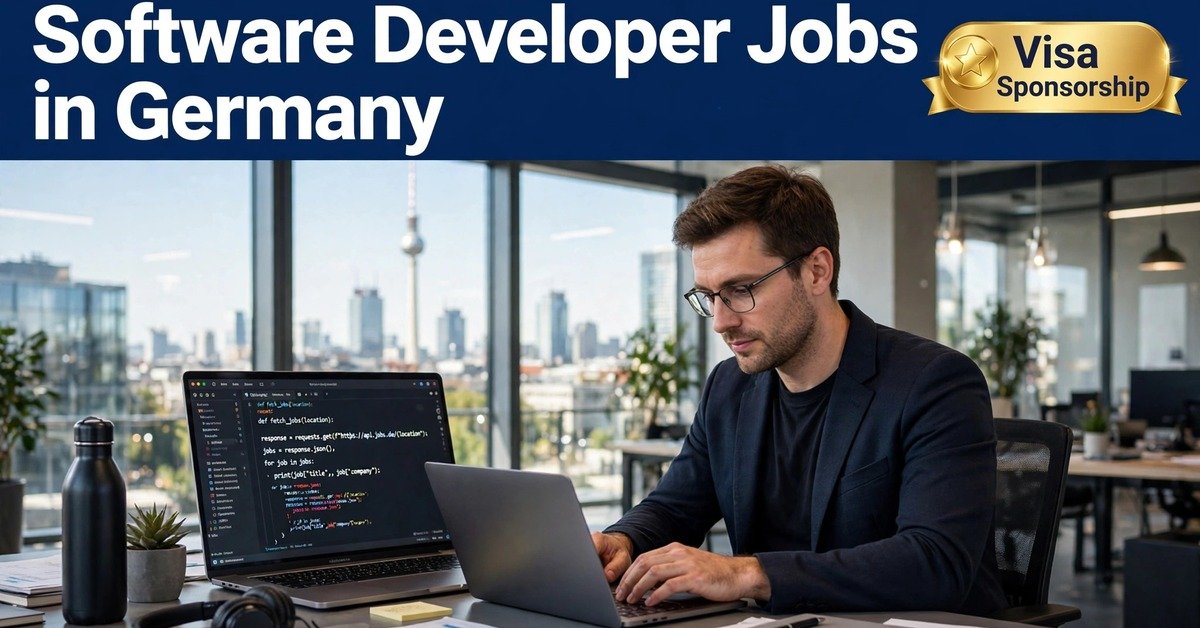
Germany is one of the strongest job markets in Europe for software developers, and many German employers hire skilled workers from outside the European Union. If you can build software, test it, or keep it running well, there is real demand for your skills in Berlin, Munich, Hamburg, Frankfurt, and Stuttgart.
One honest point comes first: Germany has no list of approved sponsors, and no employer can promise you a visa. Sponsorship means a German employer gives you a real job offer, which you use to apply for a work and residence permit. The employer and the German authorities decide.
Also Read



Why Germany Needs Software Developers
Germany has a large technology industry, a strong car industry, banks, hospitals, and many mid-sized companies that all need software. At the same time, the country faces a shortage of skilled information technology workers, with industry groups reporting a shortfall of well over one hundred thousand IT specialists. Large employers such as SAP, Siemens, and Deutsche Telekom hire developers, and many teams work in English.
What a Software Developer Does
A software developer writes, tests, and improves computer programs. You write clean code, test your work, fix errors, and work with other developers. Front-end developers build the part users see, back-end developers build servers and databases, and full-stack developers do a mix of both. Employers look for practical skill first: problem solving, readable code, teamwork, and learning new tools.
Software Developer Jobs in Demand
The most common developer roles in Germany include:
- Front-end developers — websites and apps with JavaScript frameworks such as React or Angular
- Back-end developers — servers and databases with Java, Python, C#, or PHP
- Full-stack developers — a mix of front-end and back-end work
- Mobile developers — apps for Android and iOS
- Cloud and DevOps engineers — Amazon Web Services, Microsoft Azure, Docker, and Kubernetes
- Data engineers and AI developers — large sets of data and machine learning tools
- Software testers — finding errors before users do
Useful languages include Java, Python, JavaScript, TypeScript, C++, and C#, plus cloud platforms, SQL databases, Git, and testing tools.
Salary: What Software Developers Earn in Germany
Pay varies by experience, skills, city, and company size. Big-city employers often pay more, but living costs there are also higher. The figures below are gross pay, before tax and social insurance.
| Experience Level | Typical Gross Pay Per Year |
|---|---|
| Junior developer, 0 to 2 years of experience | €41,000 to €55,000 |
| Mid-level developer, a few years of experience | €55,000 to €72,000 |
| Senior developer, 5 or more years of experience | €72,000 to €95,000 or more |
StepStone reports a median gross salary of about €65,250 per year, and Glassdoor reports a median total pay of about €63,000. Pay also matters for your visa, because the EU Blue Card has a minimum salary rule.
Visa Sponsorship and the EU Blue Card
The EU Blue Card is the most common route for developers moving to Germany from outside the European Union. To qualify, you normally need a recognised university degree, a concrete job offer, and a salary that meets the minimum threshold. The contract must run for at least six months.
Software development is a shortage occupation, so its threshold is lower than the general one. At the time of writing, the general threshold is about €50,700 gross per year, while the reduced threshold for IT is about €45,934. Confirm the current figure on Make it in Germany, as amounts change regularly. There is no German language requirement for the card, and permanent settlement can be as short as 21 months with B1 German.
The Skilled Immigration Act and Other Visa Routes
The Skilled Immigration Act is the German law that makes it easier for skilled workers from outside the European Union to work in Germany. It covers the EU Blue Card and the skilled worker visa for people with recognised vocational training, so formal training may qualify you even without a degree. Without a job offer yet, the Opportunity Card (Chancenkarte) is another option. This points-based permit lets you come to Germany for up to one year to look for work, if you can support yourself. You still need a qualifying job offer to switch to a full work permit.
Do You Need a Degree?
A recognised degree makes the EU Blue Card route simpler, but it is not the only way. Under the IT specialist rule, you can still qualify without a degree if you have at least three years of relevant IT work experience within the last seven years, and the job needs university-level IT skills. You must still meet the salary threshold and hold a job offer. The authorities check whether your degree is comparable to a German degree, using the official anabin database. In some cases, the Central Office for Foreign Education (ZAB) can issue a Statement of Comparability. Keep good references from past employers.
German Language: Do You Need It?
You do not need German to get an EU Blue Card, and many software jobs use English. Still, learning German helps in daily life, for renting a home, visiting a doctor, and talking to local offices, and it helps your career with German-speaking customers. Reaching B1 level, which means everyday conversation, can shorten your path to permanent settlement.
Where to Find Real Software Developer Jobs in Germany
Use trusted sources only, and never pay anyone for a job offer. A real employer never asks you to pay for a visa, a contract, or a job. Search on Make it in Germany, the official government portal for skilled workers; the Federal Employment Agency Job Board; EURES, the European job mobility portal; Indeed Germany; and the career pages of employers such as SAP, Siemens, Zalando, and Deutsche Telekom.
How to Apply Step by Step
- Build your CV and portfolio. Use a clear CV in English, one or two pages, with links to your GitHub profile or past projects.
- Search trusted job boards. Use Make it in Germany, the Federal Employment Agency Job Board, EURES, and Indeed Germany.
- Apply directly to the employer. Send a short cover letter explaining why you fit the role, and mention you will need visa support.
- Prepare for interviews. Most German tech interviews include a coding test plus questions about your past projects.
- Get a written job offer. Do not resign until you have a signed contract with the salary, start date, and job title.
- Apply for your visa. Take your contract, degree or proof of experience, and passport to the German embassy.
Common Mistakes to Avoid
- Applying everywhere without reading the job. A few careful applications work better.
- Using a long, unclear CV. Keep it short and show real projects.
- Ignoring the salary threshold. A job offer below the EU Blue Card threshold will not qualify for that route.
- Trusting agents who promise a guaranteed visa. Only the embassy and the Foreigners Office decide.
- Paying for a job offer. Real employers never charge job seekers.
Frequently Asked Questions
Q: Can I get a software developer job in Germany without a degree?
A: Yes. With at least three years of relevant IT work experience within the last seven years, you may qualify under the IT specialist rule, as long as your job offer meets the salary threshold. A strong portfolio and good references matter a lot.
Q: Do I need to speak German to work as a software developer in Germany?
A: Not always. Many tech teams work in English, and the EU Blue Card has no German language requirement. Learning German still helps daily life, your career, and a faster path to settlement.
Q: Is visa sponsorship in Germany guaranteed if I get a job offer?
A: No. A job offer is the first step, not a guarantee. You must still meet the visa rules, and the embassy and the Foreigners Office decide.