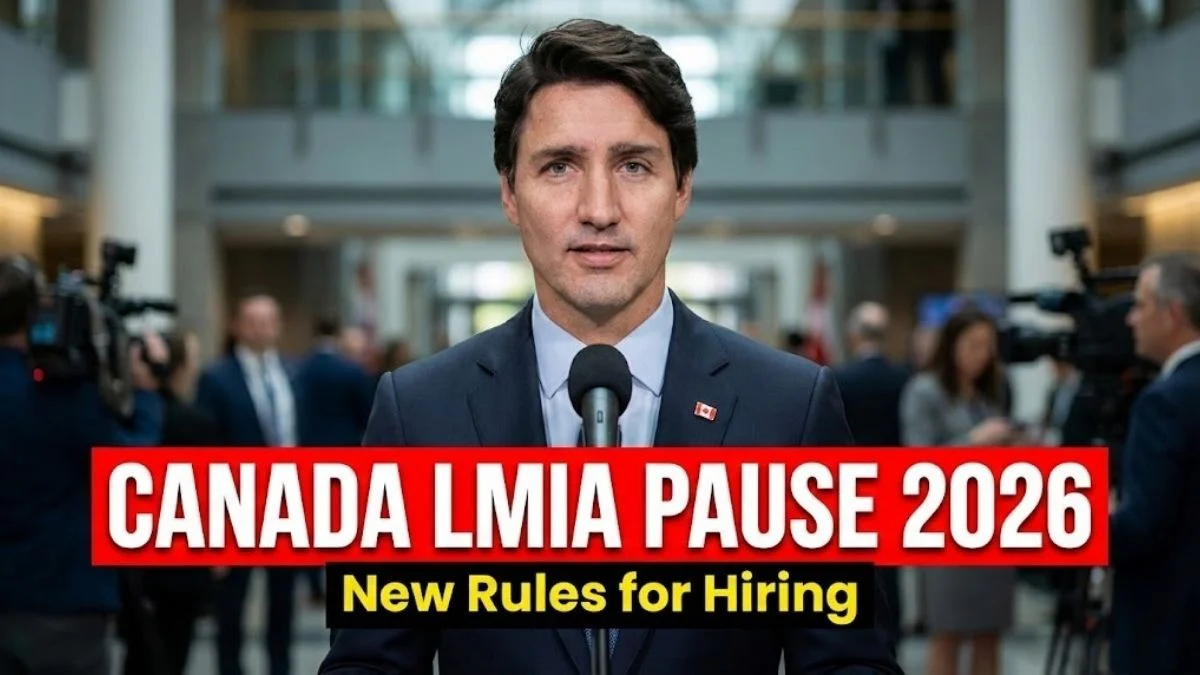
The Canadian labor market has entered a period of significant recalibration. As of early 2026, the Government of Canada has solidified strict measures under the Temporary Foreign Worker Program (TFWP) to prioritize domestic talent.
Central to these changes is the Labour Market Impact Assessment (LMIA) pause in regions where the local workforce is underutilized.
Also Read



This policy, which gained momentum in late 2024 and 2025, is now a pillar of the 2026-2028 Immigration Levels Plan.
Employers and prospective foreign workers must navigate a landscape defined by a 6% unemployment threshold, reduced workforce caps, and shortened permit durations.
Understanding the 6% Unemployment Threshold
The cornerstone of the current hiring restrictions is the “Refusal to Process” policy. Under this rule, Employment and Social Development Canada (ESDC) will not process new LMIA applications for the Low-Wage stream in Census Metropolitan Areas (CMAs) where the unemployment rate is 6% or higher.
The government monitors these rates quarterly. The latest update, which remains in effect through January 9, 2026, has expanded the list of ineligible regions to include major urban centers that were previously open to low-wage hiring.
This measure ensures that in areas where a sufficient number of Canadians are looking for work, businesses must look locally before seeking international recruits.
How the Refusal to Process Works
When an employer submits an LMIA for a position that pays below the provincial or territorial median wage, the system automatically checks the latest Labour Force Survey data for that specific CMA. If the region’s unemployment rate hits or exceeds 6%, the application is typically returned without being processed, and the processing fee is not charged.
Affected Cities: LMIA Status for Early 2026
As of the first quarter of 2026, several major Canadian cities remain under the hiring pause for low-wage positions. The list is dynamic and updated every three months by Employment and Social Development Canada.
Regions with Active LMIA Pauses (Ineligible)
Based on the most recent data cycles, the following cities have faced restrictions due to unemployment rates exceeding the 6% mark:
- Ontario: Toronto, Windsor, Oshawa, Hamilton, Kitchener-Cambridge-Waterloo, and Guelph.
- Alberta: Calgary, Edmonton, Lethbridge, and Red Deer.
- British Columbia: Vancouver, Abbotsford-Mission, and Nanaimo.
- Manitoba: Winnipeg.
- Saskatchewan: Regina.
- Quebec: Montréal (subject to specific provincial freezes) and Sherbrooke.
Eligible Regions (Below 6%)
Conversely, some regions have managed to keep unemployment low, allowing for continued low-wage LMIA processing:
- Quebec: Québec City and Saguenay.
- Ontario: Peterborough (recently removed from the pause list).
- British Columbia: Victoria.
Exemptions to the LMIA Pause
While the 6% rule is broad, the Canadian government has identified specific sectors that are critical to the country’s infrastructure and food security. These sectors are currently exempt from the refusal-to-process policy, regardless of the local unemployment rate:
- Primary Agriculture: Includes seasonal and non-seasonal farm work.
- Food Processing: Specifically meat and fish processing facilities.
- Construction: Essential for meeting Canada’s housing supply targets.
- Healthcare: Including nursing, specialized care, and in-home caregiving for those with high medical needs.
Employers in these sectors can still apply for low-wage LMIAs even in high-unemployment cities like Toronto or Calgary, provided they meet all other program requirements.
Key Rules and Reforms for 2026
The 2026 landscape is shaped not only by regional pauses but also by structural reforms to the TFWP aimed at reducing the total number of temporary residents in Canada to 5% of the population by 2027.
1. The 10% Workforce Cap
Most employers are now restricted to a 10% cap on the proportion of their workforce that can consist of low-wage temporary foreign workers. This is a significant reduction from the 20% or 30% caps seen during the post-pandemic recovery period. For sectors like construction and healthcare, a slightly higher cap of 20% may still apply to address critical shortages.
2. Reduced Employment Duration
For the Low-Wage stream, the maximum duration of a work permit has been reduced from two years to one year. This change is intended to ensure that temporary workers are used only for truly temporary needs and to encourage employers to transition their workforce to permanent residents or Canadian citizens.
3. Increased High-Wage Threshold
To prevent “wage suppression,” the government has adjusted the boundary between the Low-Wage and High-Wage streams. As of late 2024 and continuing through 2026, a position only qualifies for the High-Wage stream if the offered wage is at least 20% above the provincial or territorial median. If an employer wants to bypass the 6% unemployment pause, they must often raise the wage to this new high-wage threshold.
4. Shortened LMIA Validity
A positive LMIA is now valid for only 6 months, down from the previous 12-month or 18-month windows. Employers must ensure that the foreign worker applies for their work permit within this tight timeframe, or the LMIA will expire.
Comparison Table: LMIA Stream Requirements 2026
| Feature | Low-Wage Stream | High-Wage Stream |
| Wage Requirement | Below 20% + Provincial Median | 20% above Provincial Median or more |
| Regional Pause | Active if Unemployment $\ge$ 6% | No regional pause based on unemployment |
| Workforce Cap | 10% (some sectors 20%) | No cap |
| Permit Duration | Up to 1 Year | Up to 3 Years (standard) |
| Exemptions | Agriculture, Healthcare, Construction | N/A |
Impact on the 2026-2028 Immigration Levels Plan
The 2026-2028 Immigration Levels Plan highlights a shift toward “controlled growth.” In 2026, Canada expects to admit approximately 60,000 new workers under the TFWP, a sharp decline from previous years.
This reduction is coupled with stricter rules for the International Mobility Program (IMP), including limits on open work permits for spouses. The government’s goal is to ensure that the influx of temporary residents does not outpace the country’s capacity for housing and healthcare.
Important Note: Employers are now required to use the “Direct Apply” feature on the National Job Bank for at least four weeks before applying for an LMIA. Failure to review and document local applications can lead to an immediate rejection of the LMIA.
Strategic Advice for Employers and Workers
For Employers
- Review Wage Brackets: Check if increasing the offered wage to the High-Wage threshold is financially viable to avoid the 6% regional pause.
- Diversify Recruitment: Focus on hiring underrepresented groups in Canada, such as youth, newcomers, and persons with disabilities, as these efforts are scrutinized during the LMIA process.
- Plan Ahead: With a 6-month LMIA validity, the window to bring a worker to Canada is narrow. Coordination between HR and immigration consultants is vital.
For Foreign Workers
- Target Exempt Sectors: If you are seeking a low-wage role, focus on healthcare or construction, where the 6% pause does not apply.
- Look for Rural Opportunities: Regions outside of Census Metropolitan Areas (CMAs) often do not fall under the refusal-to-process rule.
- Monitor Expiry Dates: Since low-wage permits are now limited to one year, start your renewal or permanent residency (PR) planning much earlier.
Conclusion
The Canada LMIA Pause of 2026 represents a move toward a more sustainable and domestic-focused labor market. By tying hiring eligibility to regional unemployment rates and tightening the rules for the Low-Wage stream, the federal government aims to balance economic needs with social infrastructure. For stakeholders, staying updated on quarterly unemployment data and sector-specific exemptions is no longer optional—it is a requirement for successful navigation of Canada’s immigration system.
Frequently Asked Questions
What is the 6% rule for Canada LMIAs in 2026?
The 6% rule states that the Canadian government will refuse to process Low-Wage LMIA applications in Census Metropolitan Areas (CMAs) where the unemployment rate is 6% or higher. This is intended to ensure local workers are prioritized for available jobs.
Which sectors are exempt from the LMIA hiring pause?
Sectors exempt from the 6% unemployment refusal policy include primary agriculture, food and fish processing, construction, and healthcare. Employers in these fields can still hire low-wage foreign workers regardless of the local unemployment rate.
How long is a low-wage work permit valid in 2026?
Under the new 2026 regulations, the maximum duration for a work permit issued through the Low-Wage LMIA stream is one year. This is a reduction from the previous two-year limit.

Marc Sterling is a knowledgeable writer focused on immigration, citizenship, and visa processes, helping readers navigate complex legal landscapes.
Also he covers all the Latest News around Canada Daily.